Damp Stripe Under a Parapet
- You See
- A wet band along the top of an inside wall.
- What It Means
- Water enters at the cap or mortar joints above the roof and runs down inside the brick.

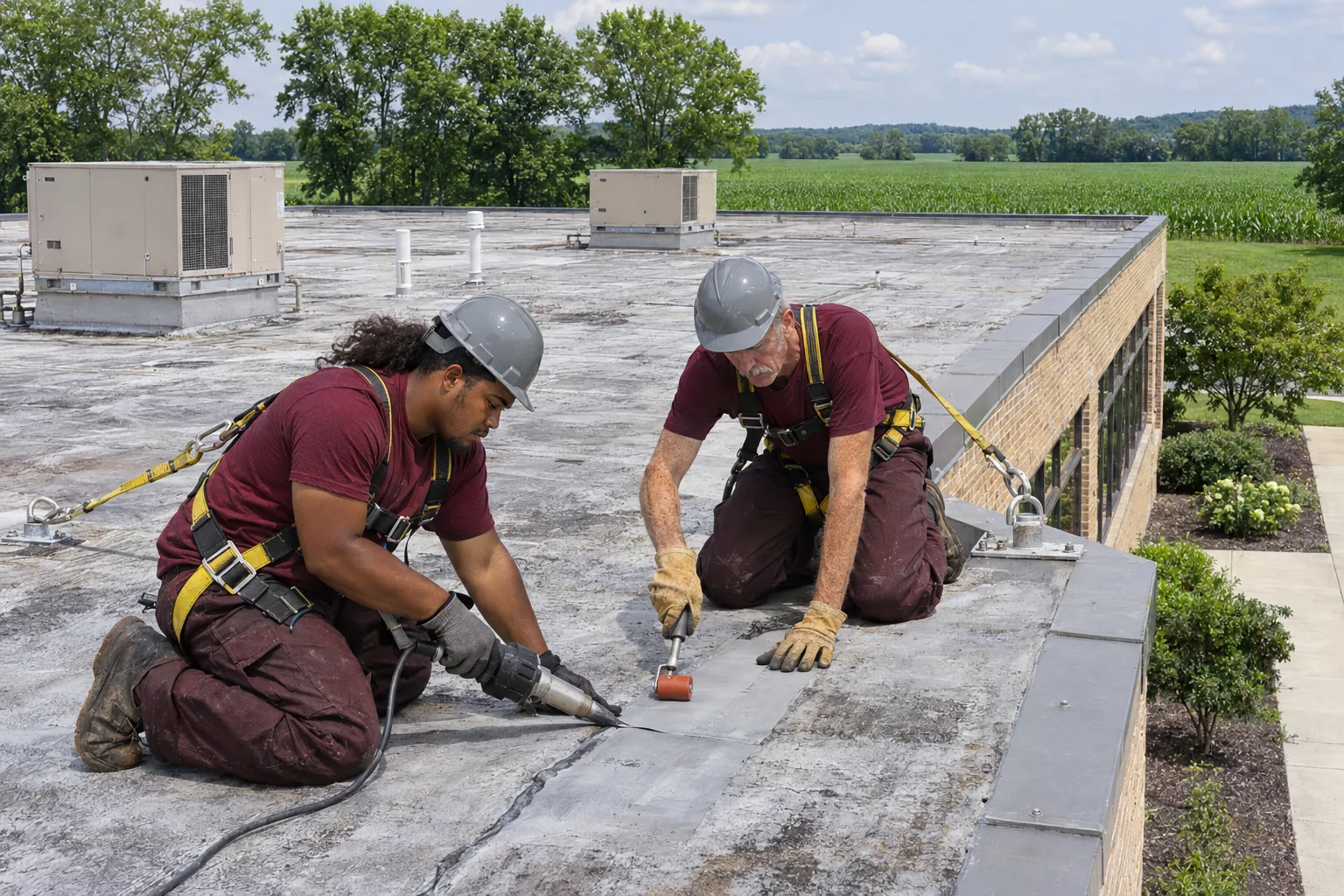
As a Madison commercial roof repair contractor, we repair parapet caps, counterflashing, drains, and curbs on older masonry buildings with several roof layers.
Madison commercial roof repair on older buildings starts by finding out what sits under the top layer and whether water enters above the roof.
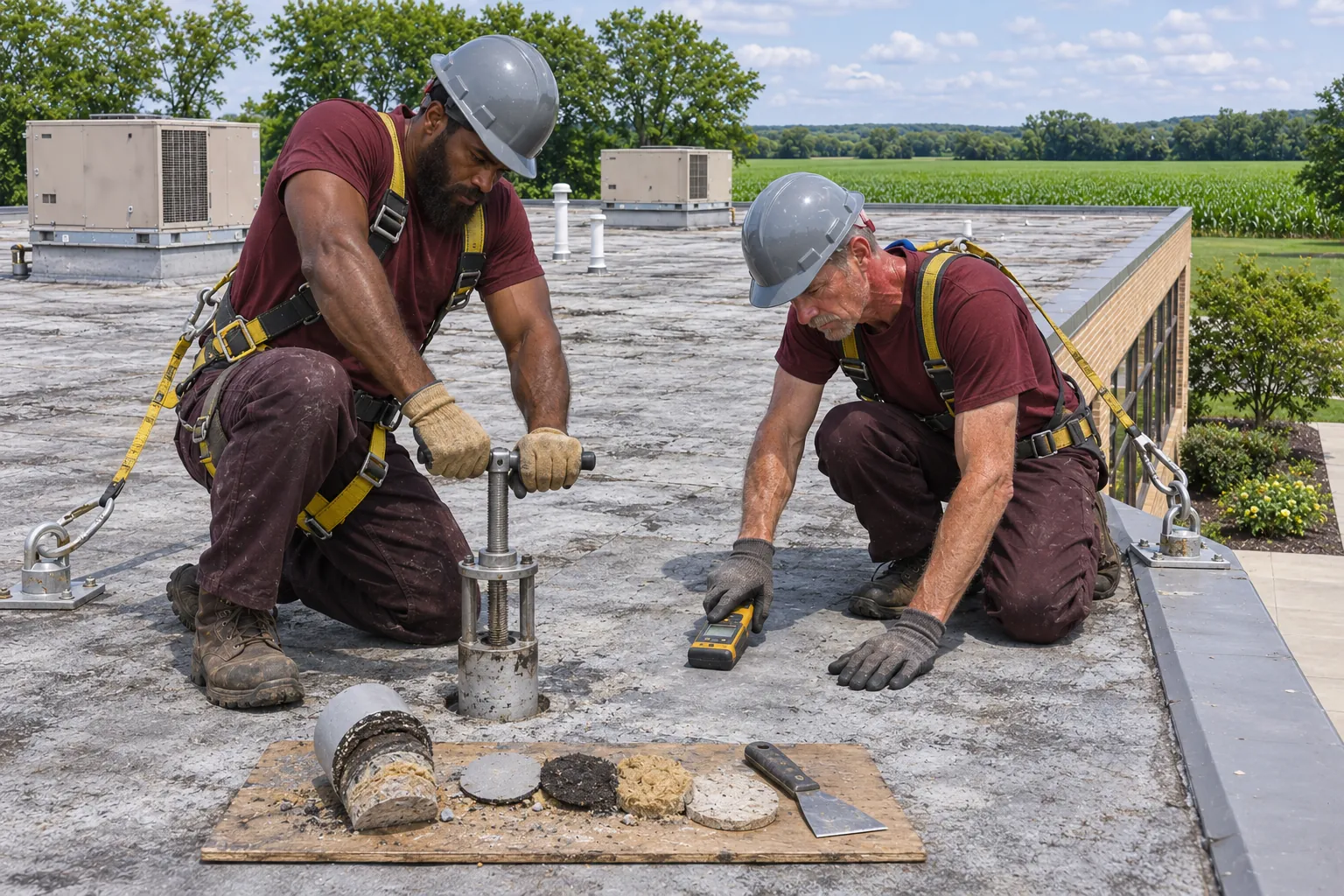
Older commercial buildings often carry two or three roofs stacked on the deck, with brick parapets along the edges. A core sample shows each layer and how wet it is before we cut anything.
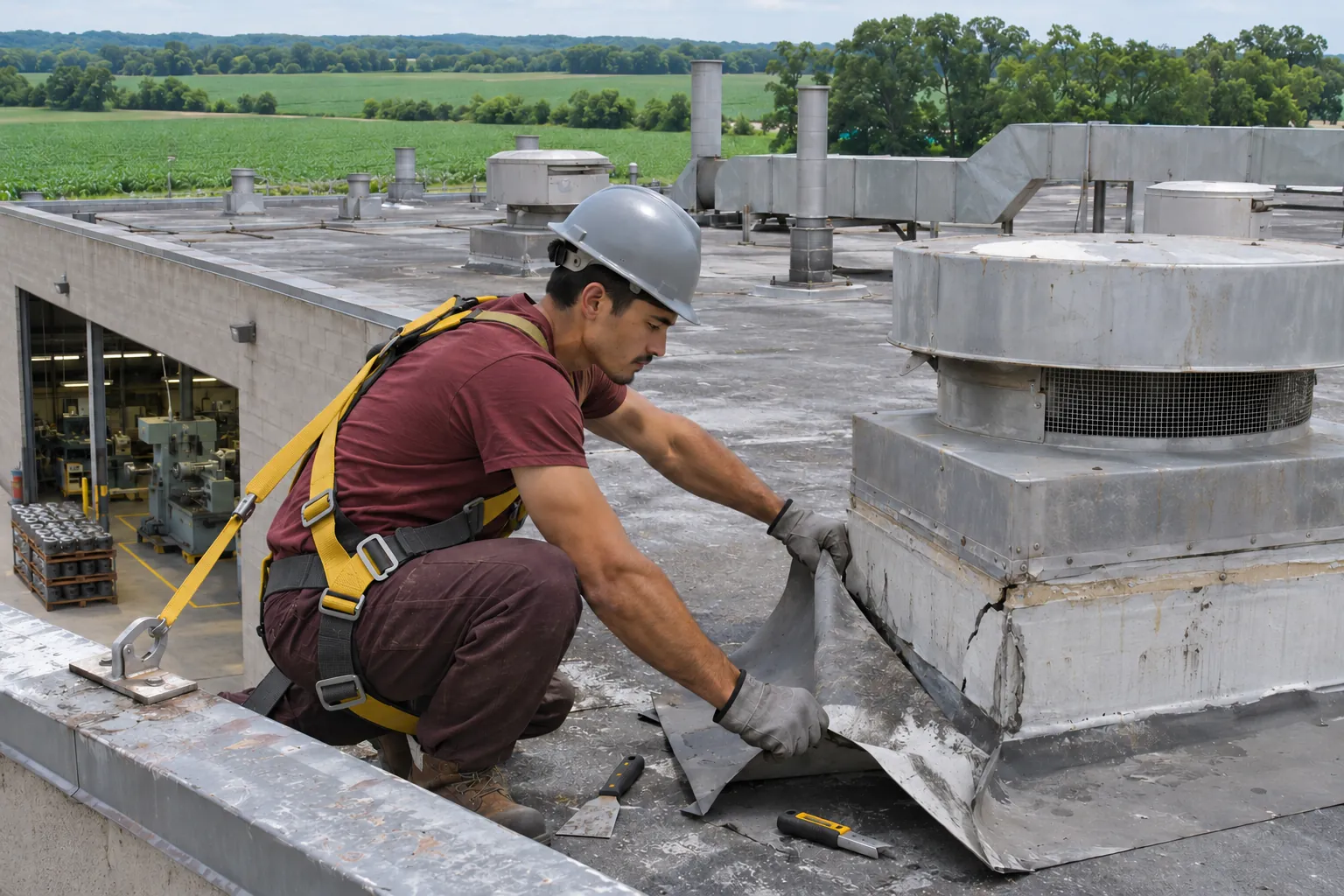
Many leaks on these buildings start in the parapet: a gap at the cap, a cracked mortar joint, or dried counterflashing. Water runs down inside the wall and shows up at the roof line.
Six conditions show up again and again on older masonry roofs. The chip names the cause.
Each pair names an older-building failure and what the repair changes there.
Joints in metal or stone caps open over the years and let rain into the top of the wall.
Cap joints are sealed or the cap is reset, which stops water before it reaches the roof line.
Cracked mortar and dried sealant behind counterflashing feed water into the wall face.
Counterflashing gets reset with new sealant, and the report notes mortar joints that need a mason.
Leaks on stacked roofs spread sideways between layers before they show inside.
Wet layers are cut out down to a dry surface and rebuilt in matching material.
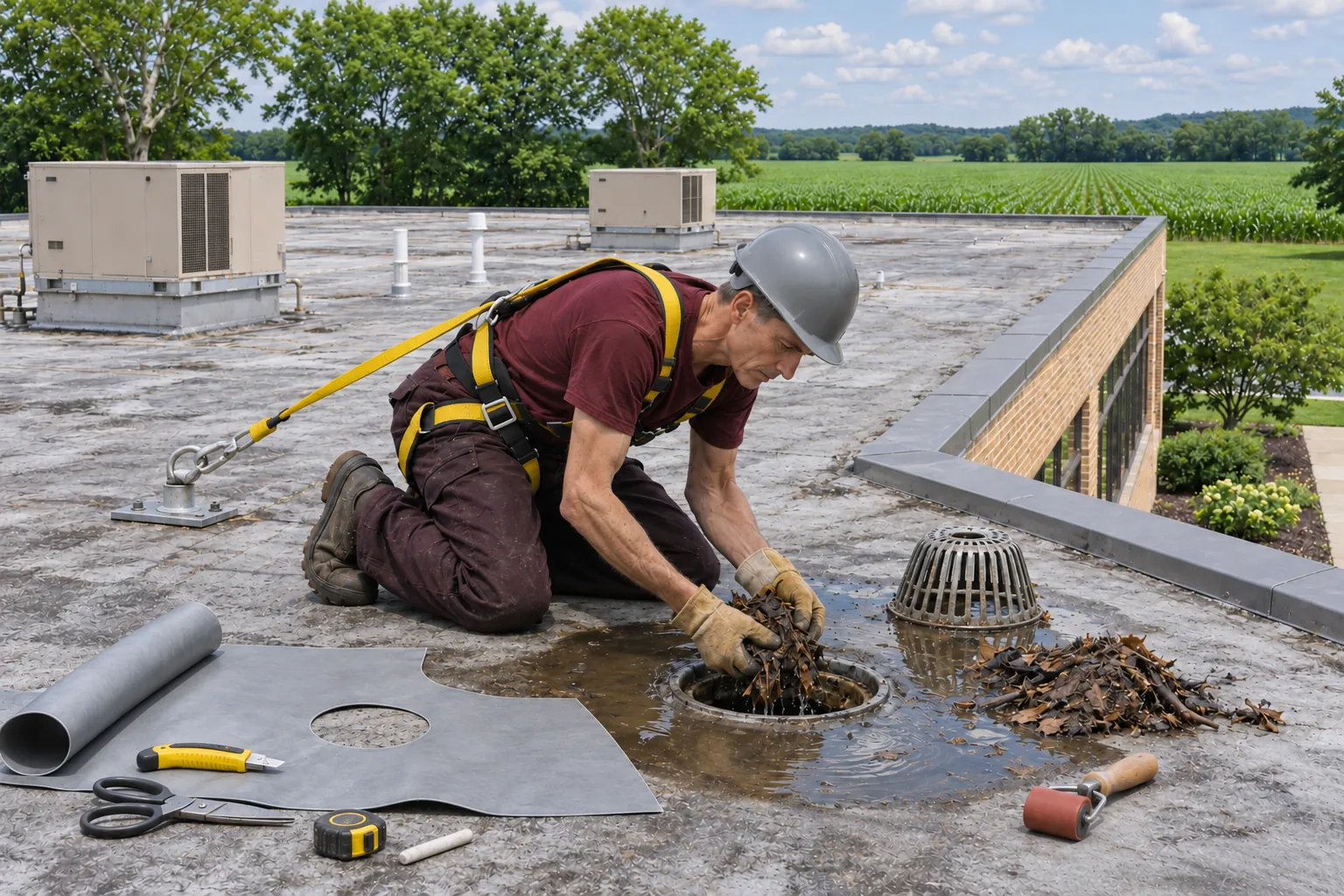
Drains sit lower than the roof around them after each re-roof, so water stands short of the bowl.
Flashing is rebuilt so the roof steps down into the drain and the water reaches it.
Call and describe where the stain sits on the wall. Parapet leaks often start well above the spot you see.
Older buildings get the wall checked as closely as the roof. Five rows, in order.
Stains on the upper walls and ceiling get marked, along with any damp plaster or brick near the roof line.
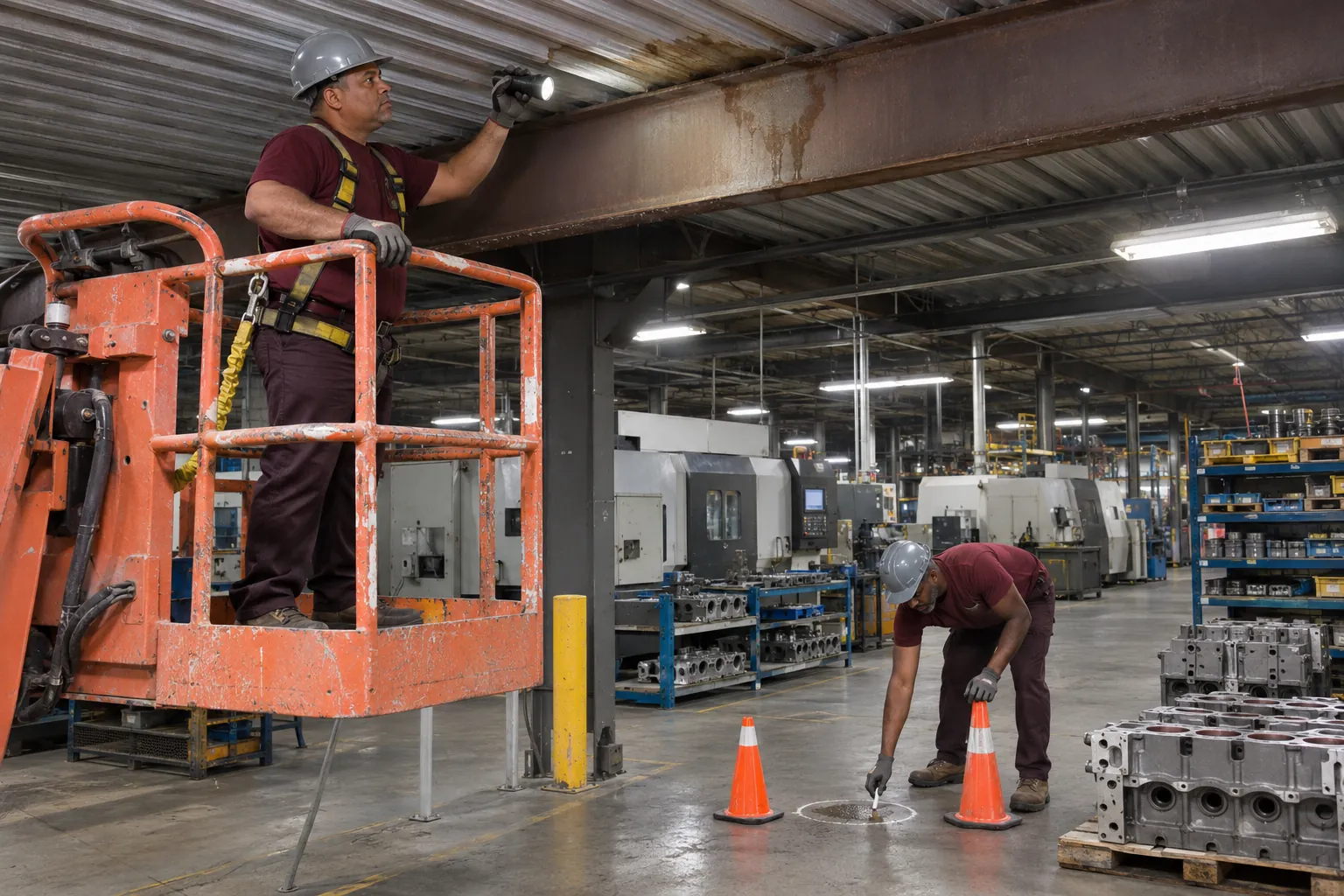
Up top, parapet caps, mortar joints, and counterflashing get checked before the roof field, since many leaks start there.
A core shows how many roofs sit on the deck and which layers are wet, which sets the depth of each repair.
The scope separates roof repairs from masonry items, so you know which trade handles each one.
Caps, flashing, and roof patches go on in matching material, and every repair is photographed for your records.
Besides Madison, we cover Columbus and four other towns. Building elsewhere? call us or send us a message.
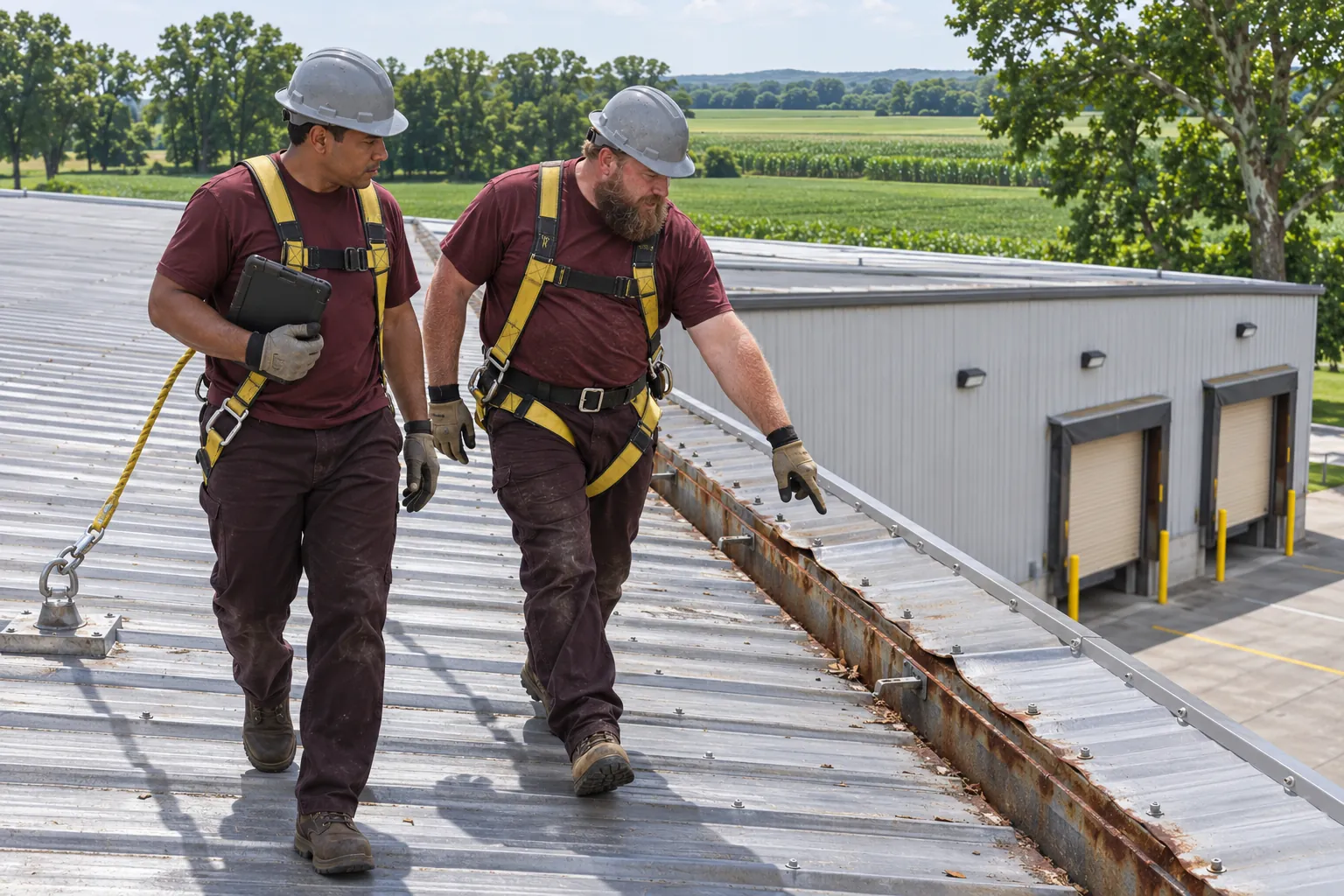
Warehouse roofs with skylights, hatches, and long membrane runs.
Seymour commercial roof repair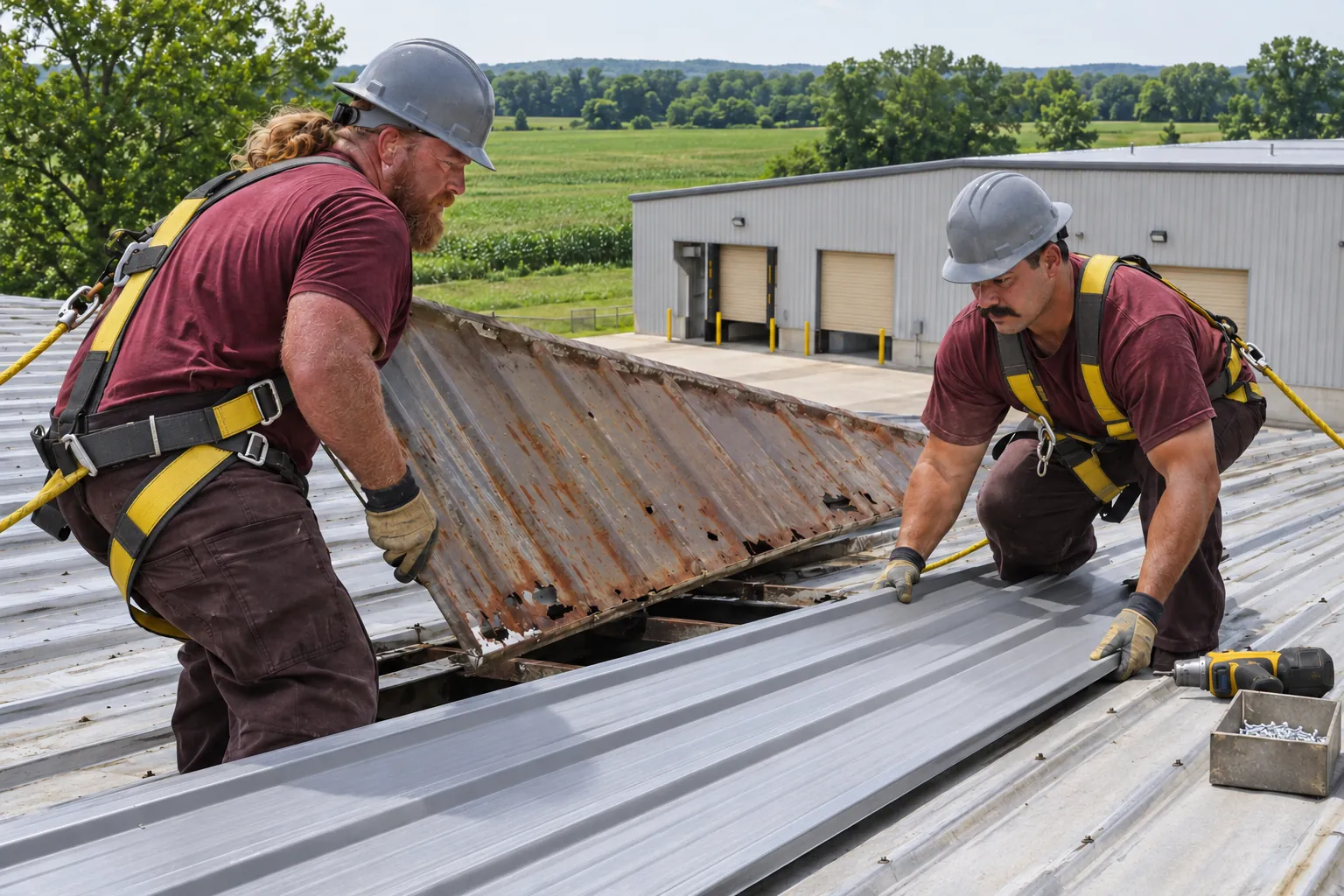
Leaks, parapets, and old roof layers on Madison buildings.
Yes. Leaks at drains, parapets, curbs, and seams on Madison commercial and industrial buildings are work we repair. Older buildings can carry several roof layers, so we check underneath while tracing, and wet insulation found along the way is replaced.
Call (930) 271-9105 with the address and a note on where water shows up. Madison is inside our coverage area, and the first visit is an inspection.
We handle the roof side: caps, counterflashing, and base flashing. When mortar joints need repointing, the scope names them so a mason can take that part.
The number of roof layers, how much insulation is wet, parapet and drain work, and access around neighboring buildings set the price. A free inspection comes first.
Only where they are wet or failing. Dry layers can stay under a patch, and cores show which areas qualify.
With planning, yes. Roof material deliveries, ladders, and any lift are scheduled around sidewalks, neighbors, and business hours, and the setup stays inside the space the property allows.
Each layer on the deck and each masonry detail adds a question. Cores and a close look at the parapet answer them before any price goes on paper.
Tell us where the walls or ceilings show water. We will check the parapets and layers and send a written scope.