Leak Repair Handles
- A stain with no obvious match on the roof
- Drips that show up only after snowmelt
- Water running down an inside wall under a parapet
- Leaks that move between storms
- Wet ceiling tile under a rooftop unit

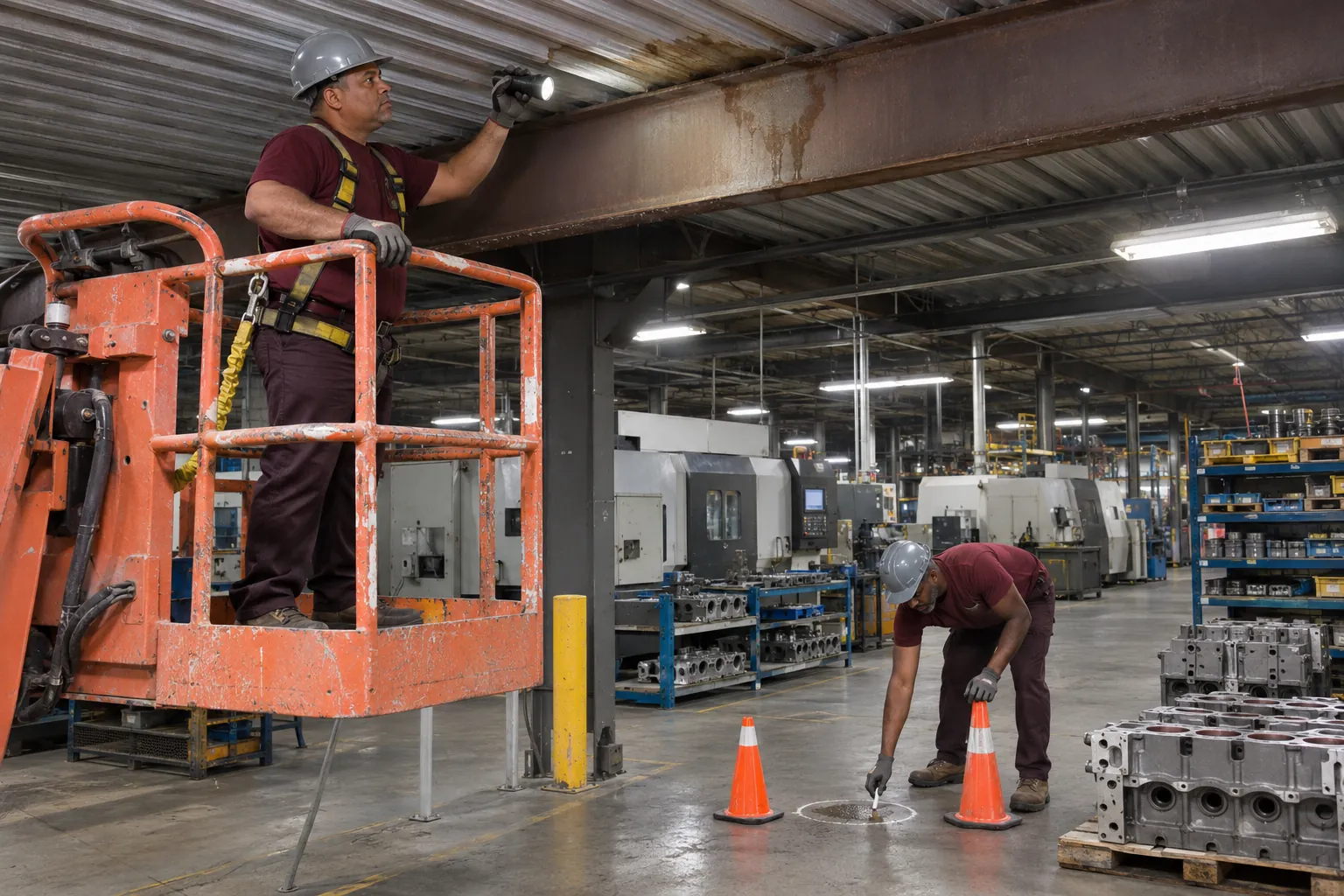
As a Columbus commercial roof leak repair contractor, we follow each drip from the ceiling up to the parapet, curb, lap, or drain letting water in.
Columbus commercial roof leak repair starts where you first see water. These lists show what tracing finds and when a leak points to a bigger roof problem.
How and when a leak shows up says a lot about where it starts. Six patterns we read first.
Each pair names where a leak starts and what the repair changes at that detail.
Gaps at the wall cap and cracked mortar let water into the wall, where it runs down and appears at the roof line.
We seal the cap joints and counterflashing first, then repair the base flashing where the wall meets the roof.
Meltwater hits a cold eave, refreezes, and backs up under laps and trim on metal buildings.
Eave laps and edge flashing get resealed, scuppers get opened, and the report notes any heat loss feeding the dam.
Flashing pulls away from curbs, gaskets fail, and technicians crack the sheet while servicing units.
The curb is reflashed, the unit resealed, and walkway pads go down on the service path.
In a downpour, water rises past flashing set too low at walls or curbs and runs behind it.
Flashing gets raised above the high-water line, and the drain that let the water rise is cleared.
Write down the date of the snowfall and the first drip. That timing helps us find the opening fast once we are on the roof.
Tracing happens before any patch. These five rows run in the same order on every leak.
We tag each drip and stain inside with tape and a number, and note the date and weather when it first appeared.
From a lift, we look for rusted flutes, wet insulation edges, and water trails that point upslope toward the opening.
On the roof, each tag is matched to the laps, curbs, drains, and parapets upslope of it until the opening turns up.
Where the source is unclear, a controlled water test on one detail at a time confirms it before the repair.
The opening is closed in matching material, wet insulation around it is replaced, and the finished detail is photographed.
Once the opening is found, the fix uses one of these services, depending on the roof.
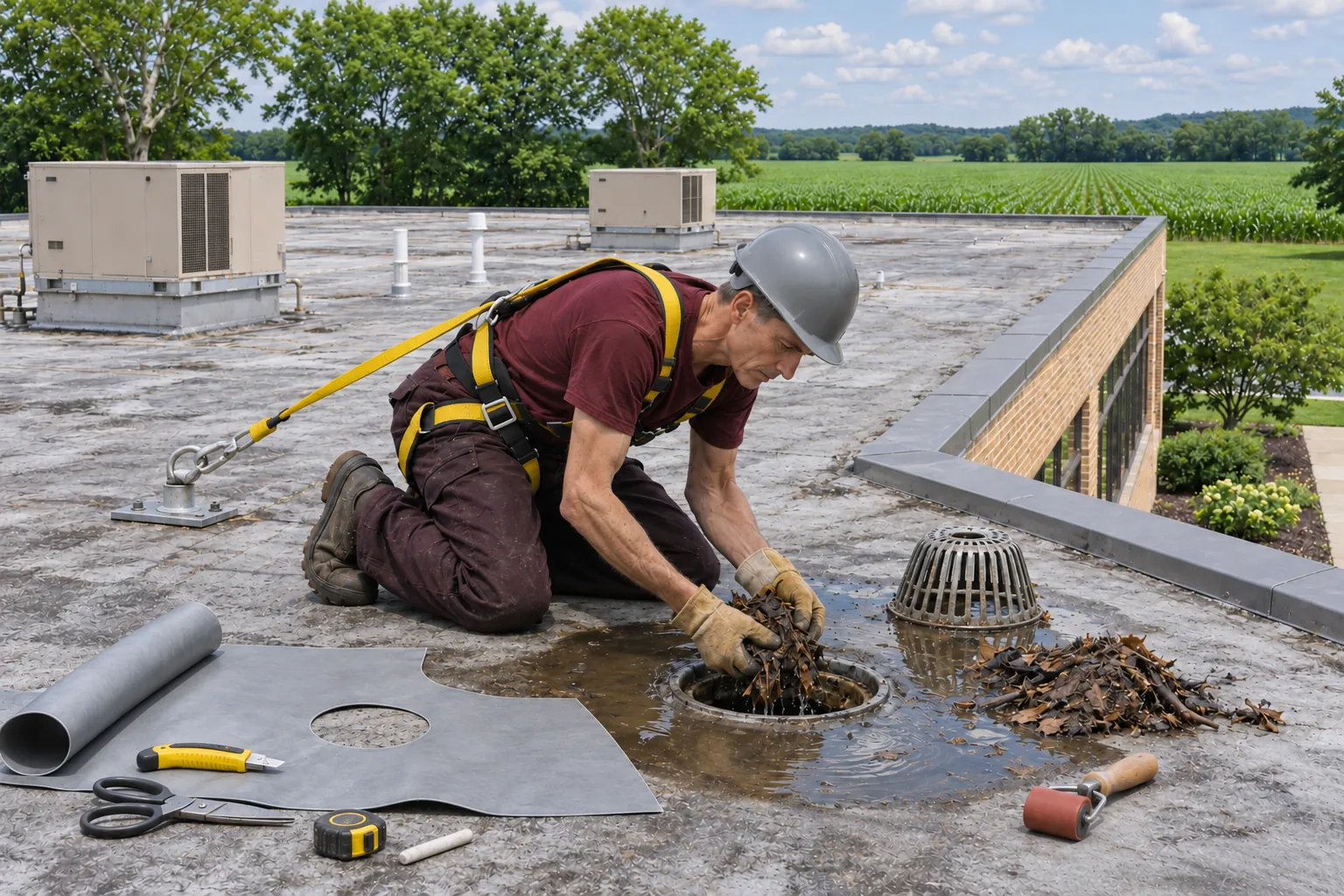
Drains, blisters, and open laps rebuilt in matching membrane.
Typical Repairs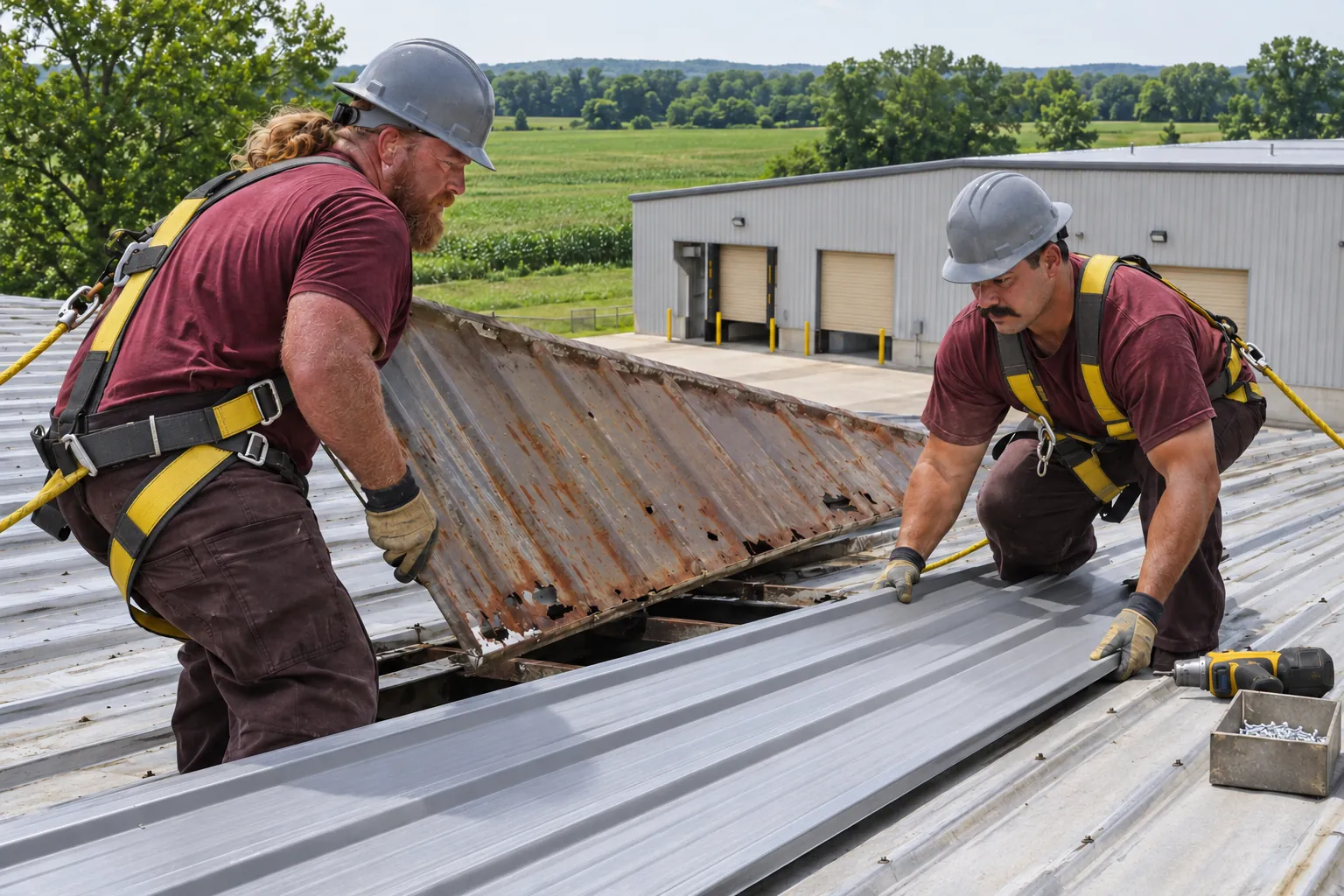
Loose screws, open laps, and rusted panels replaced to match.
Typical Repairs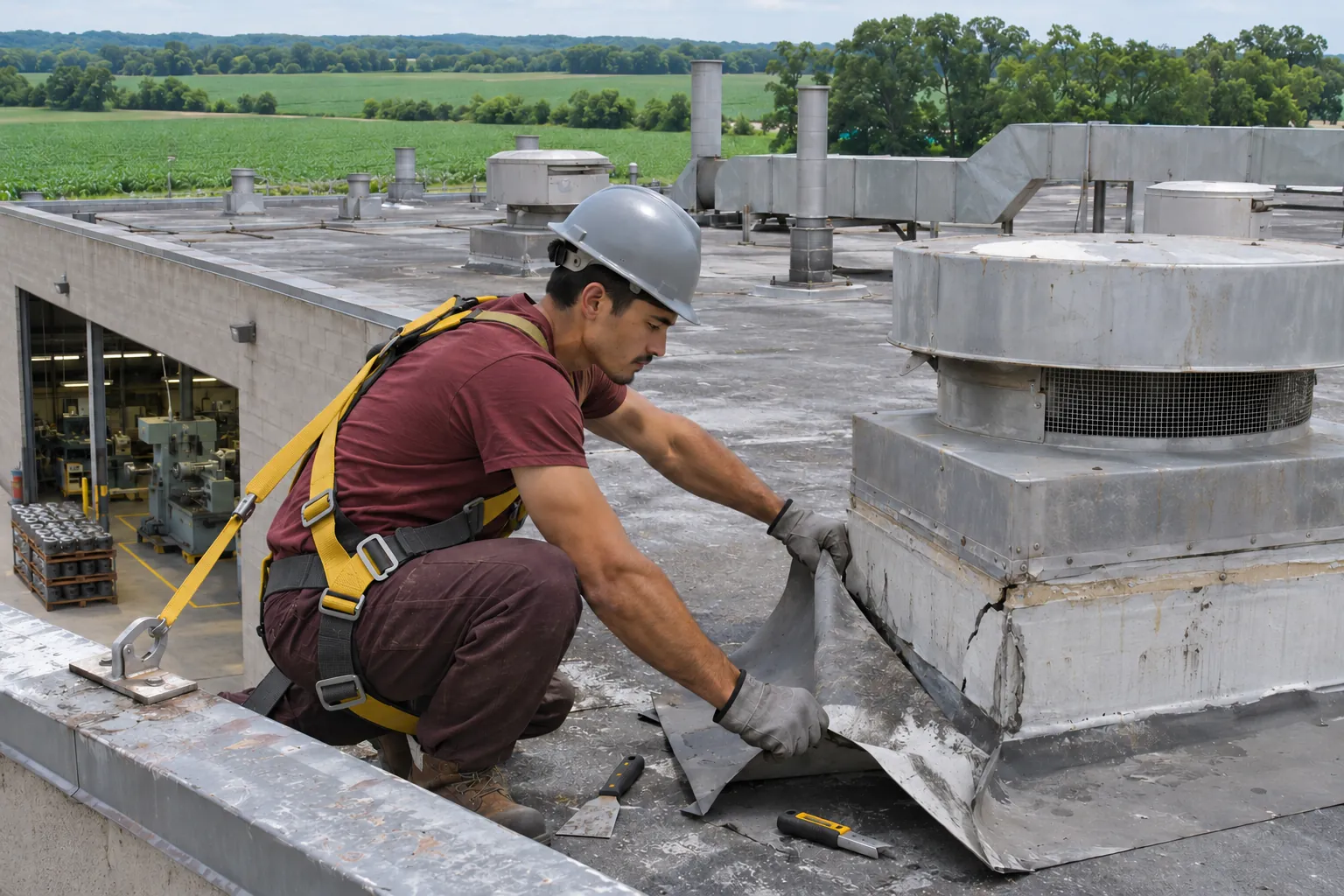
Fan curbs, stacks, and worn paths repaired around production.
Typical RepairsSnowmelt, parapets, ice dams, downpours, and unit curbs.
Snow is a slow water source. Daytime sun melts it, and the water runs under the snow toward drains that are still frozen, so it sits against curbs and walls for days. Seams that opened in the cold let it in, which is why the drip shows up late.
Most parapet leaks begin above the roof surface. Water enters through gaps in the wall cap, cracked mortar in brick parapets, or dried sealant behind counterflashing, then runs down inside the wall. We repair that entry point first and the base flashing second.
Ice dams form at gutters, low metal eaves, and flat roof scuppers, where meltwater meets a cold edge and refreezes. Trapped water then seeps under laps and trim. Resealing eave laps and edge flashing and opening frozen scuppers stops the leak; cutting heat loss at the edge stops the cycle.
No. A roof in good shape stays dry in heavy rain. Leaks that appear only in downpours usually come from clogged drains, water rising above flashing, open laps in ponding areas, or overflowing gutters, and each of those is repairable once found.
Curb leaks start when membrane flashing pulls away, the counterflashing or unit gasket fails, or water ponds around a curb set too low. Technicians also crack flashing while servicing units. Reflashing the curb, resealing the unit, and adding walkway pads fixes it.
Tell us where the water lands and when it started. We will trace it to the opening and send a written repair scope.