Industrial Repair Handles
- Leaks at fan, stack, and pipe curbs
- Membrane softened by exhaust residue
- Drains with loose clamps or missing strainers
- Punctures along technician paths
- Small wet areas under equipment

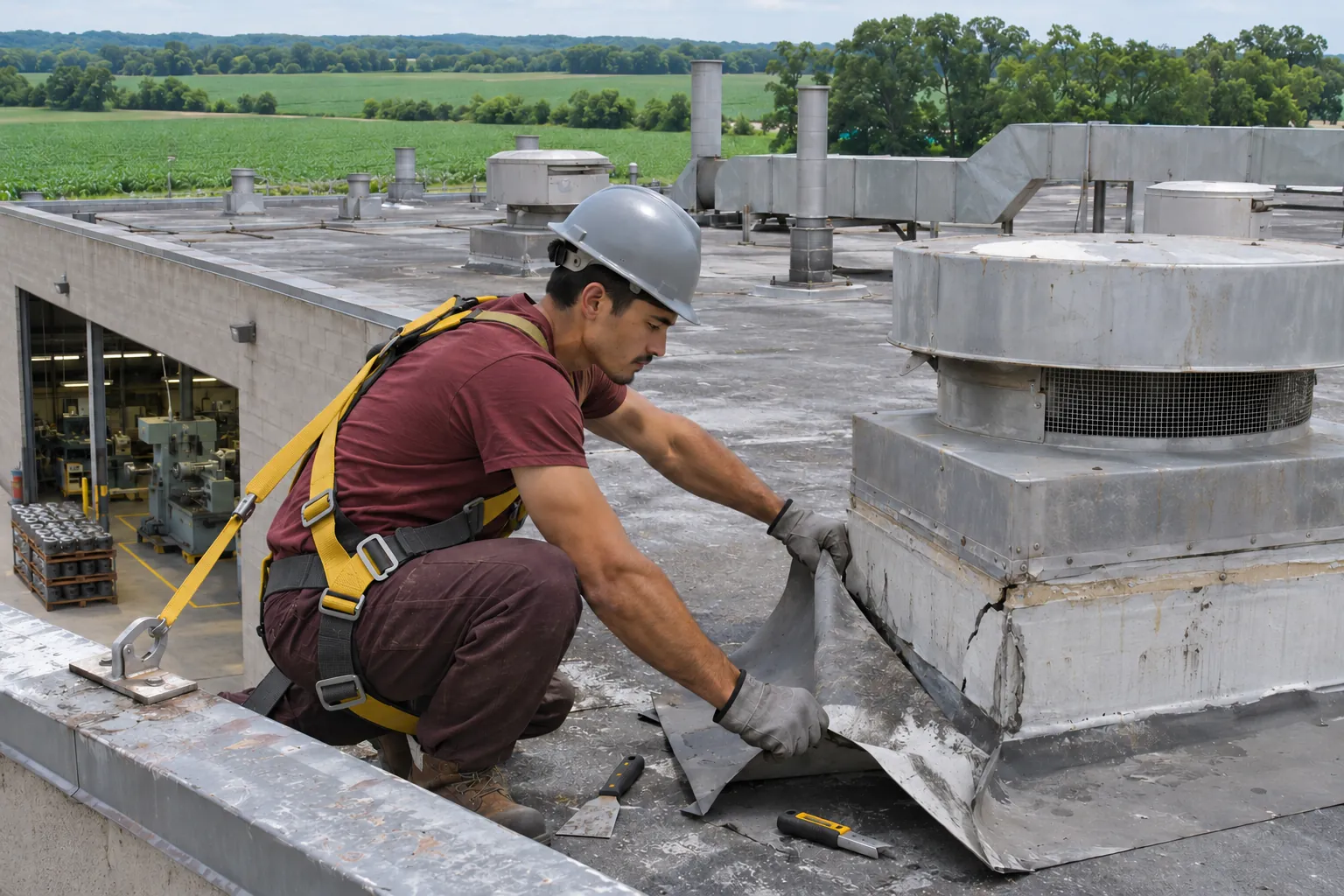
As a Columbus industrial roof repair contractor, we repair fan curbs, stacks, drains, and worn service paths on plant roofs while production keeps running below.
Columbus industrial roof repair is planned around the plant below. These lists show what repair handles and when a roof section needs a larger plan.
Plant roofs wear in their own ways. Six conditions we repair most, with the cause on each chip.
Each pair names a plant roof failure and what repairing that detail does for the floor below.
Exhaust residue and vibration crack the flashing at fan curbs, often right above a machining line.
Residue is cleaned off, damaged sheet is cut out, and the curb is re-flashed to height in heat- and oil-rated membrane.
Clamping ring bolts rust and loosen, and the membrane pulls back from the drain flange as the roof moves.
New bolts reset the clamp, the membrane is re-terminated into the bowl, and missing strainers get replaced.
Technicians reach the same units by the same route for years, and the membrane along it thins and splits.
Reinforced patches go down first, then walkway pads mark and protect the path from the hatch.
Slow leaks at a curb can soak the insulation around equipment for months before anyone sees a drip.
Cores find the edge of the wet area, which is cut out and replaced before the curb is sealed.
Call with the bay and the equipment below it. We will plan the repair around your next changeover.
Plant safety comes into the work order before the first ladder goes up.
Hot work permits, lockout, fall protection, and roof access get agreed with your safety staff before anyone goes up.
Bays below the work are mapped, and tarps or catch decks go in wherever the deck has to be opened above a line.
From each drip, the crew follows the slope to the curb, fan, pipe, or seam where water enters the roof.
Sections are opened and closed within one shift, matched to line changeovers, so nothing stays open above running equipment.
Every repair is photographed, and walkway pads go down along the routes that caused the wear.
Plants often have office roofs, steel shop roofs, and leaks that need tracing. These services cover them.
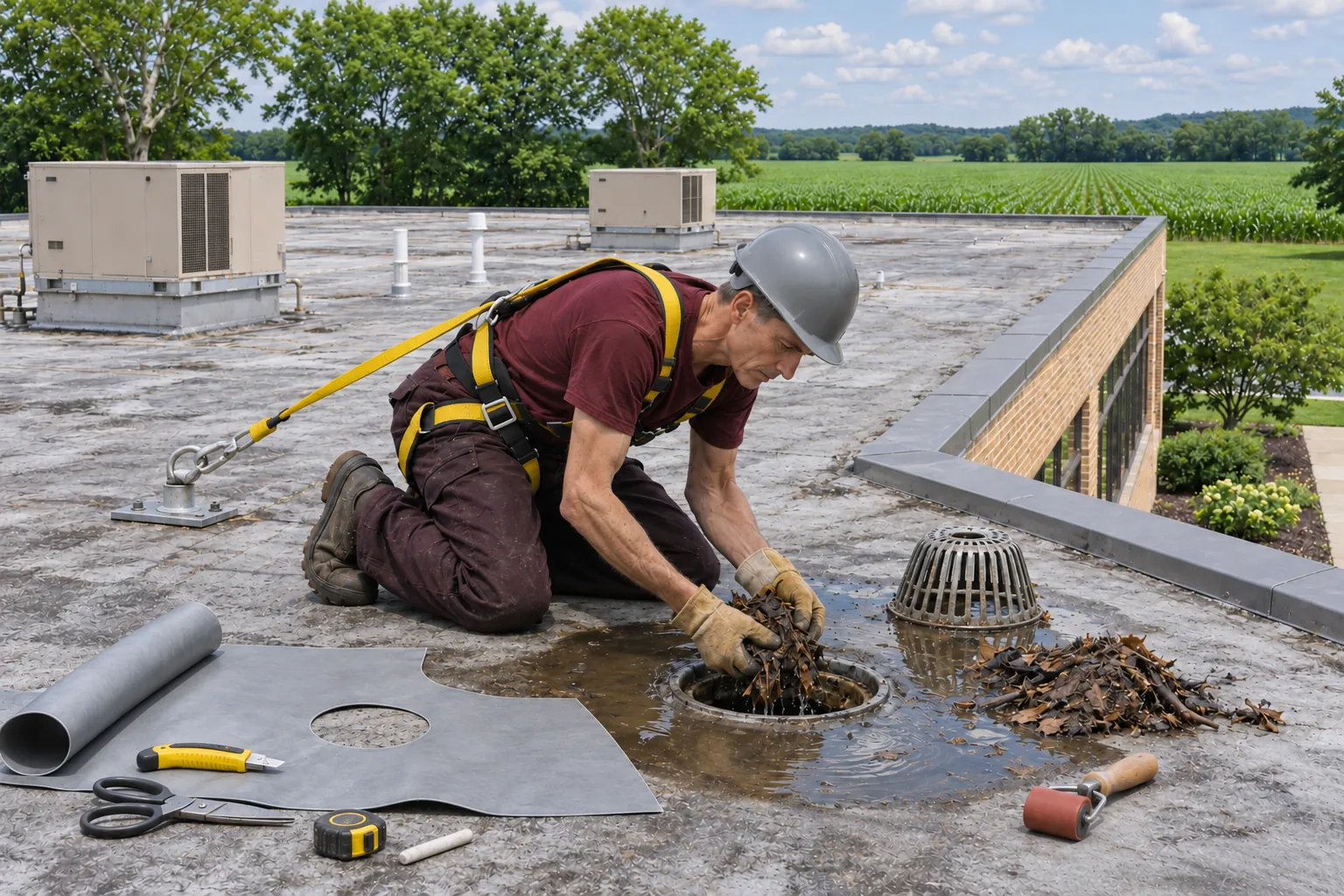
Drains, blisters, and open laps rebuilt in matching membrane.
Typical Repairs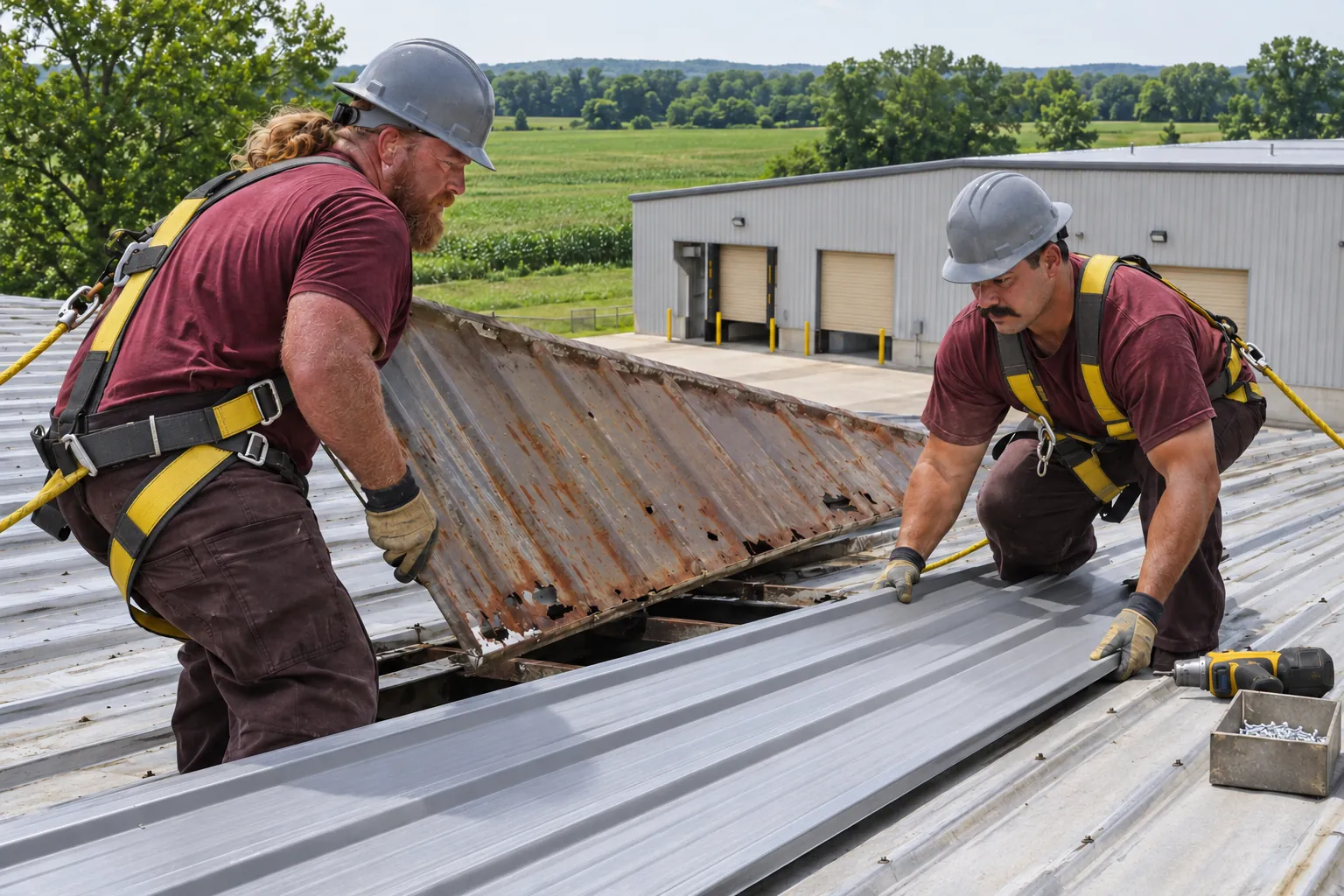
Loose screws, open laps, and rusted panels replaced to match.
Typical Repairs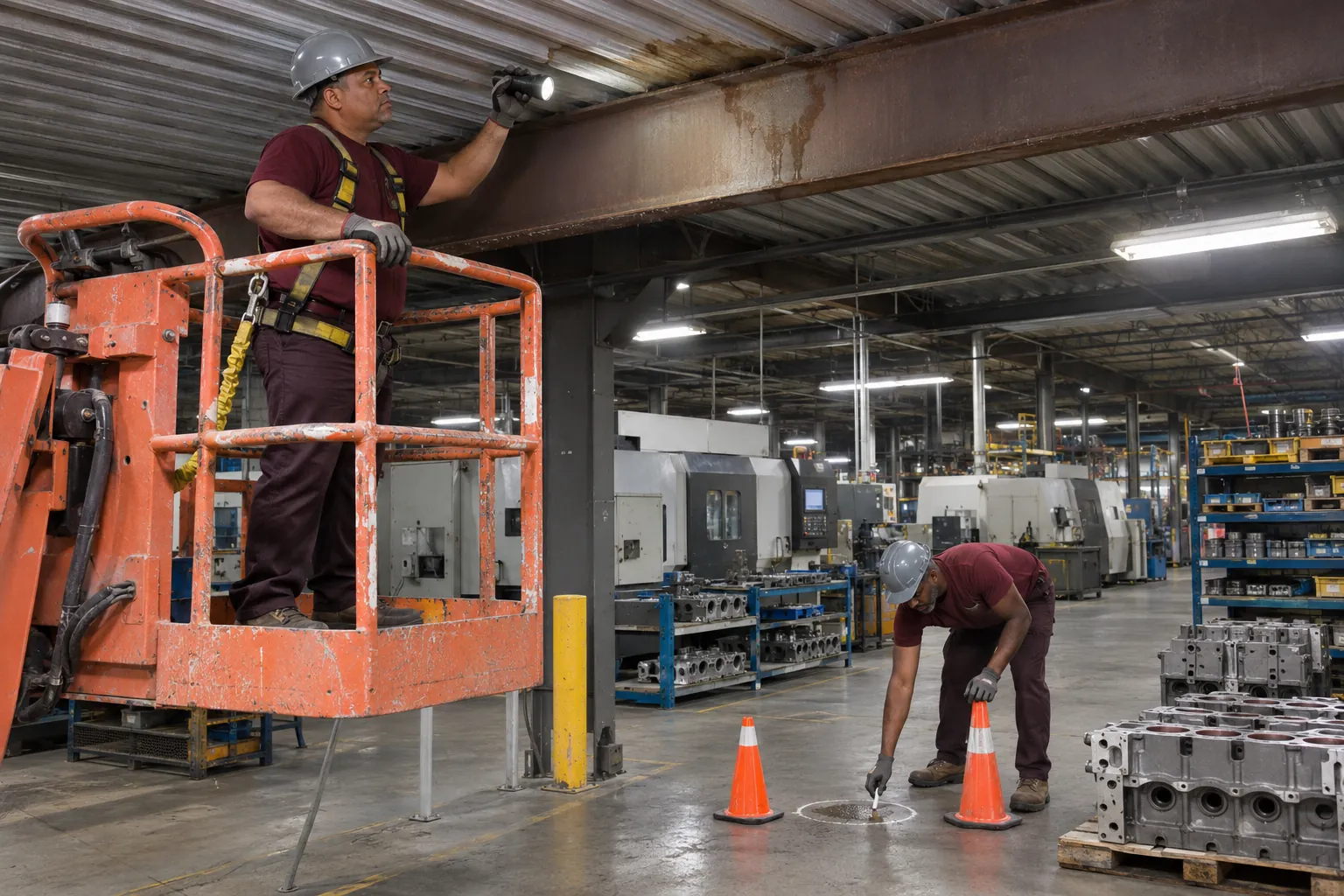
Indoor drips traced up to the roof opening first.
Typical RepairsHiring, running lines, drains, leaks, and wear around equipment.
Ask whether the roofer traces the leak before quoting, how production below gets protected, and whether the crew follows your hot work, lockout, and fall-protection rules. Ask which membrane suits your roof and any chemical exposure. Written answers to those questions tell you the most.
Most plants keep running. Work over a live floor gets planned with the plant manager: which bays can take overhead work, when lines change over, and where tarps go if the deck opens. Many leak repairs never open the deck, so the floor below sees little more than a short pause nearby.
Drain repair targets the joint between the membrane and the drain bowl. Loose or cracked clamping rings and rusted bolts are replaced, the membrane is re-terminated into the bowl, and strainers clogged or lost to equipment debris are swapped out.
Tracing runs from the drip up the slope to the source, which tends to be a curb, exhaust fan, pipe penetration, or seam damaged during equipment service. The repair uses material rated for any heat or chemical exposure, wet insulation is replaced, and walkway pads go where traffic caused damage.
Rooftop equipment brings vibration, heat, residue, and steady technician traffic, and all four wear membrane and flashing. Dropped screws puncture the sheet and vibration loosens flashing, so these areas get reinforced material, walkway pads, and a curb height check.
Tell us which bay is leaking and what runs below it. We will plan the inspection with your safety staff and send a written scope.