Flat Roof Repair Fits When
- One drain or a few laps let water in
- Blisters sit in a small area of the field
- Cores show dry insulation past the leak
- The membrane still flexes when lifted
- Ponding stays in one low spot

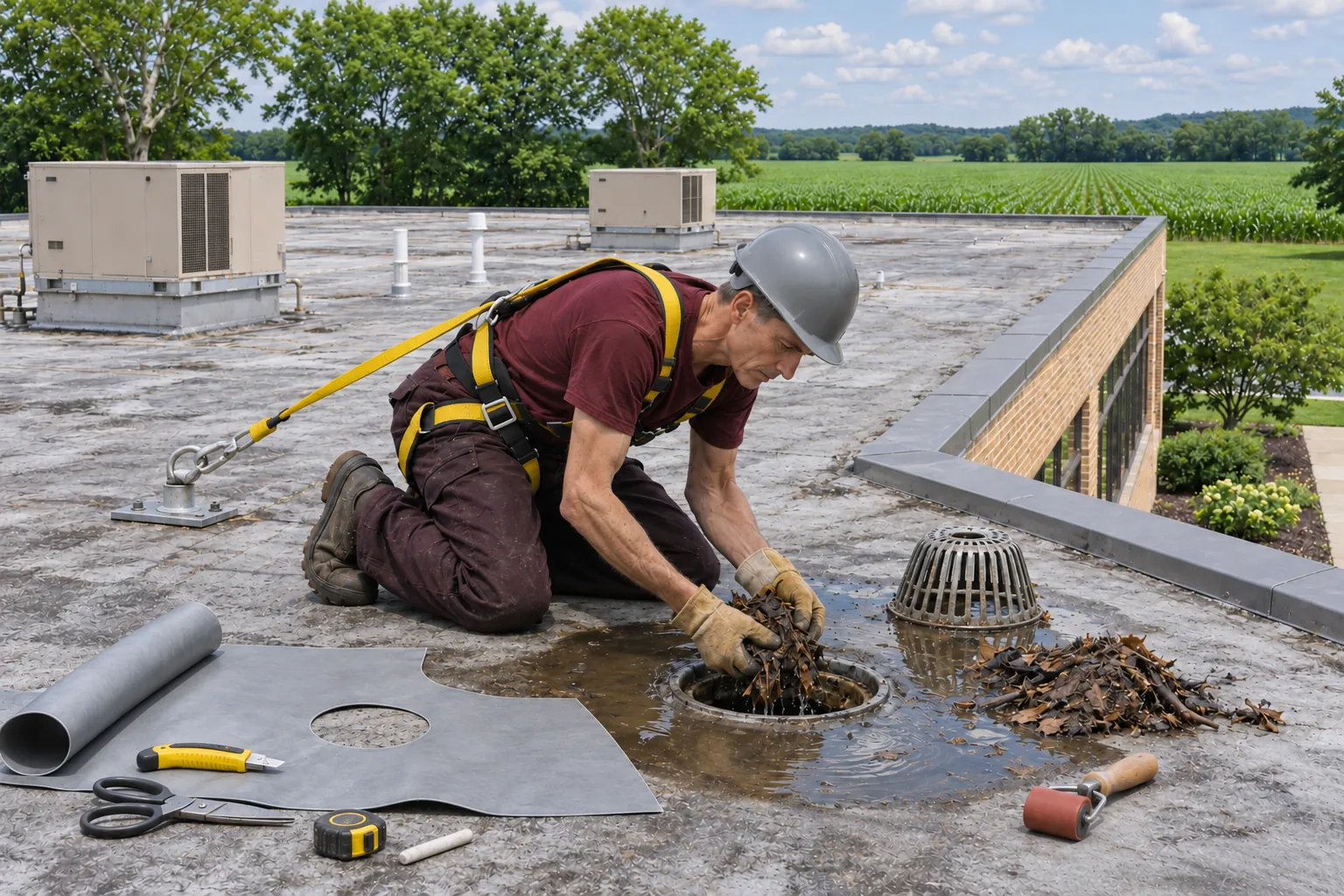
As a Columbus flat roof repair contractor, we fix drains, open laps, blisters, and wet insulation on TPO, EPDM, and modified bitumen roofs.
Columbus flat roof repair works best on a membrane that still holds together. These lists show where a repair fits and where we will talk about more.
Six conditions cover most flat roof calls we take. The chip on each card names what caused it.
Each pair names a flat roof failure and what a repair at that spot does about it.
Clamping rings loosen as the roof moves, and the membrane creeps away from the drain flange.
New bolts reset the clamp, and fresh flashing laps into the bowl so water goes down the drain instead of under the sheet.
Long membrane runs on light industrial roofs open first at the ends of each lap.
TPO laps are rewelded and EPDM laps are cleaned, primed, and taped, matching the sheet already on the roof.
Water that gets past the membrane spreads through the insulation and adds weight to the deck.
Cores mark the wet edge, the soaked boards come out, and new insulation goes in before the membrane patch.
Trapped moisture pushes the sheet up a little more each summer until the blister cracks.
Each cracked blister is cut open, dried, and sealed under a patch of compatible membrane.
Call and tell us where it pools. A cleared strainer and a reset clamp often stop a drain leak on the first visit.
Five rows on the work order, the same on every membrane roof we repair.
Under the stain, we check the deck flutes for rust and the ceiling grid for water lines, then mark the spot on a roof sketch.
Strainers come off, bowls get cleared, and clamping rings get checked for loose or rusted bolts before anything else.
Small core cuts near the leak show whether insulation is dry, damp, or soaked, and each hole is patched before we leave.
The written scope names each lap, blister, and drain to fix, the membrane to match, and the square footage of insulation to replace.
Wet boards come out, new insulation goes in, and patches are welded or primed and taped, then probed along every edge.
Flat roof work often turns up a second job. These are the repairs it pairs with most.
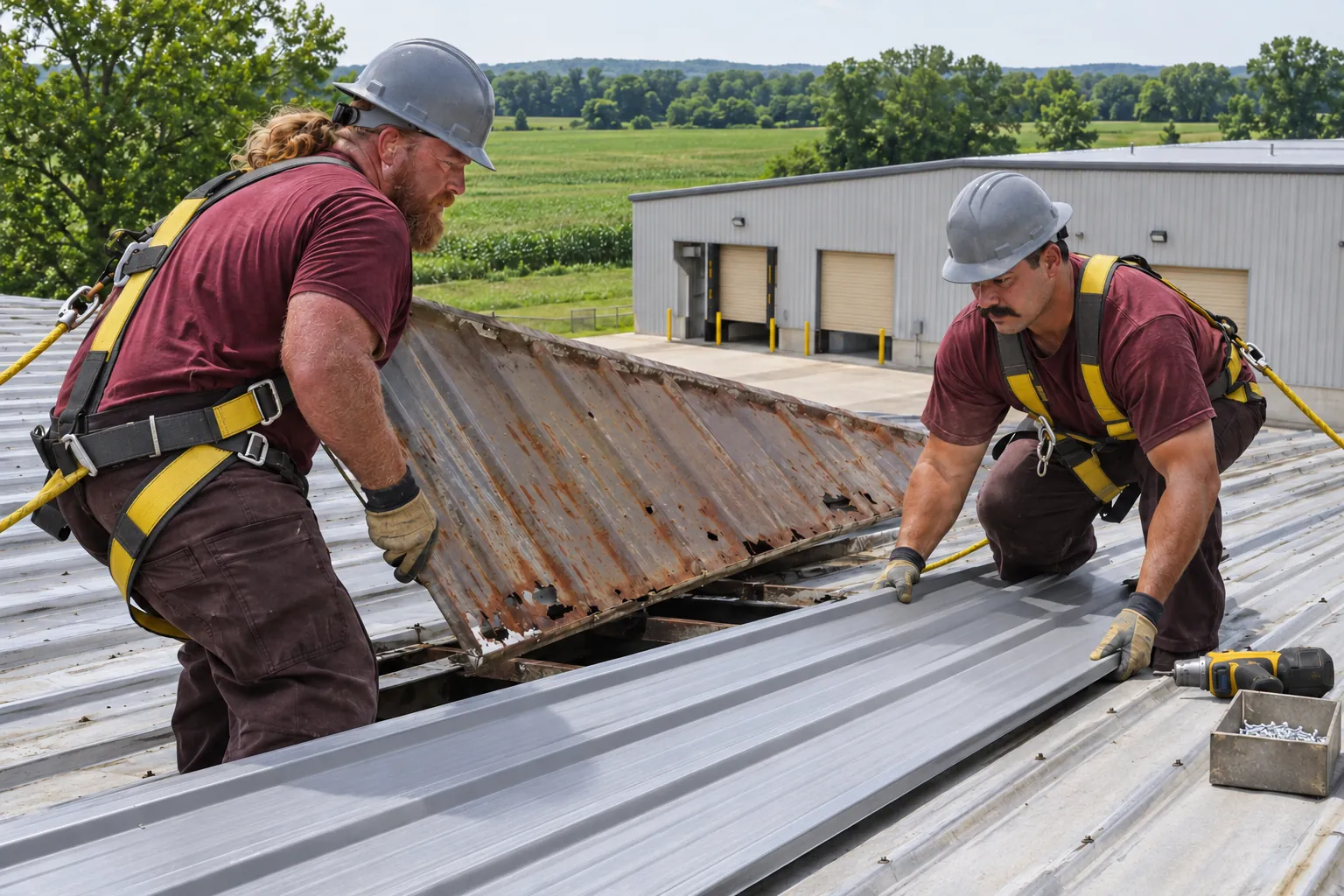
Loose screws, open laps, and rusted panels replaced to match.
Typical Repairs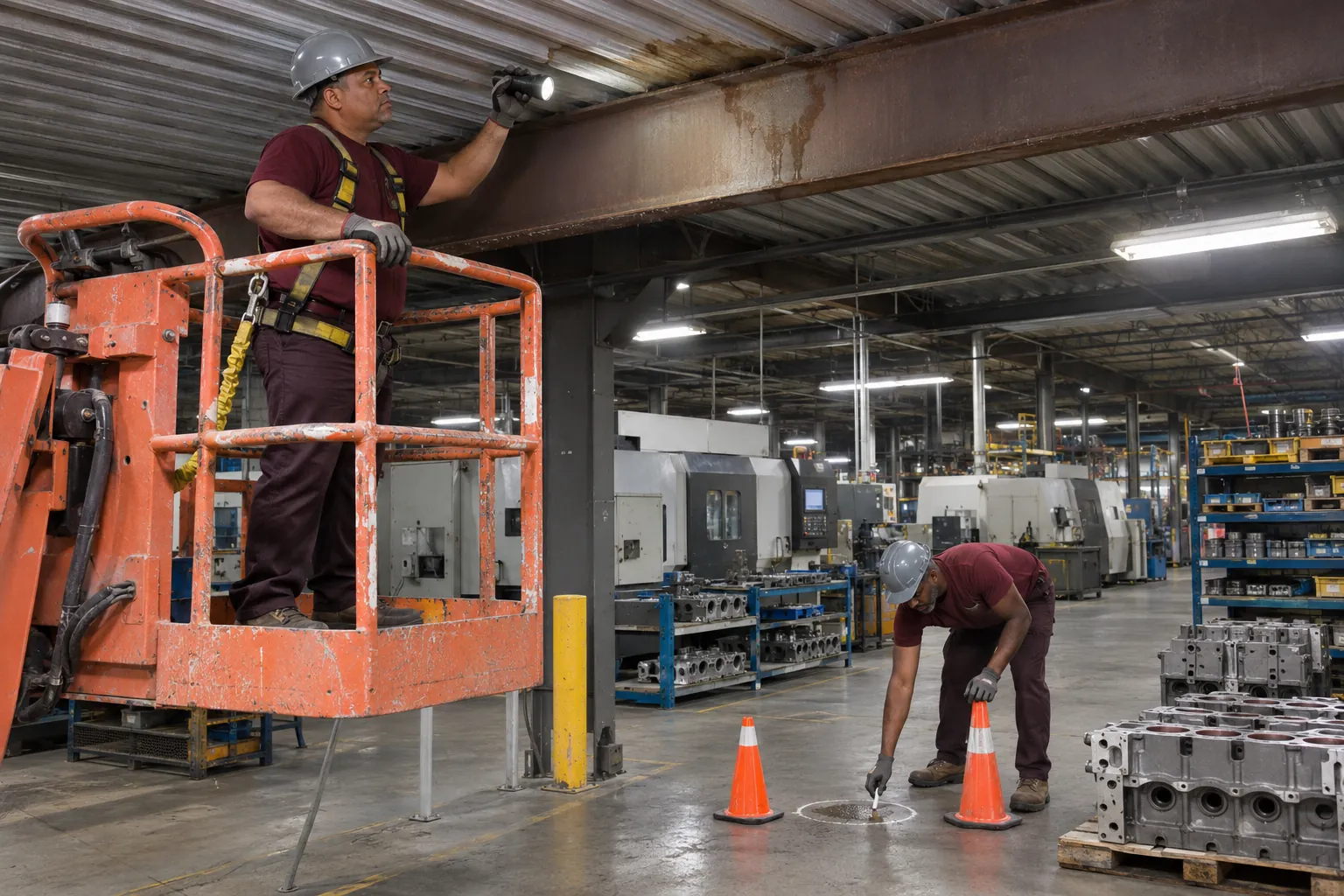
Indoor drips traced up to the roof opening first.
Typical Repairs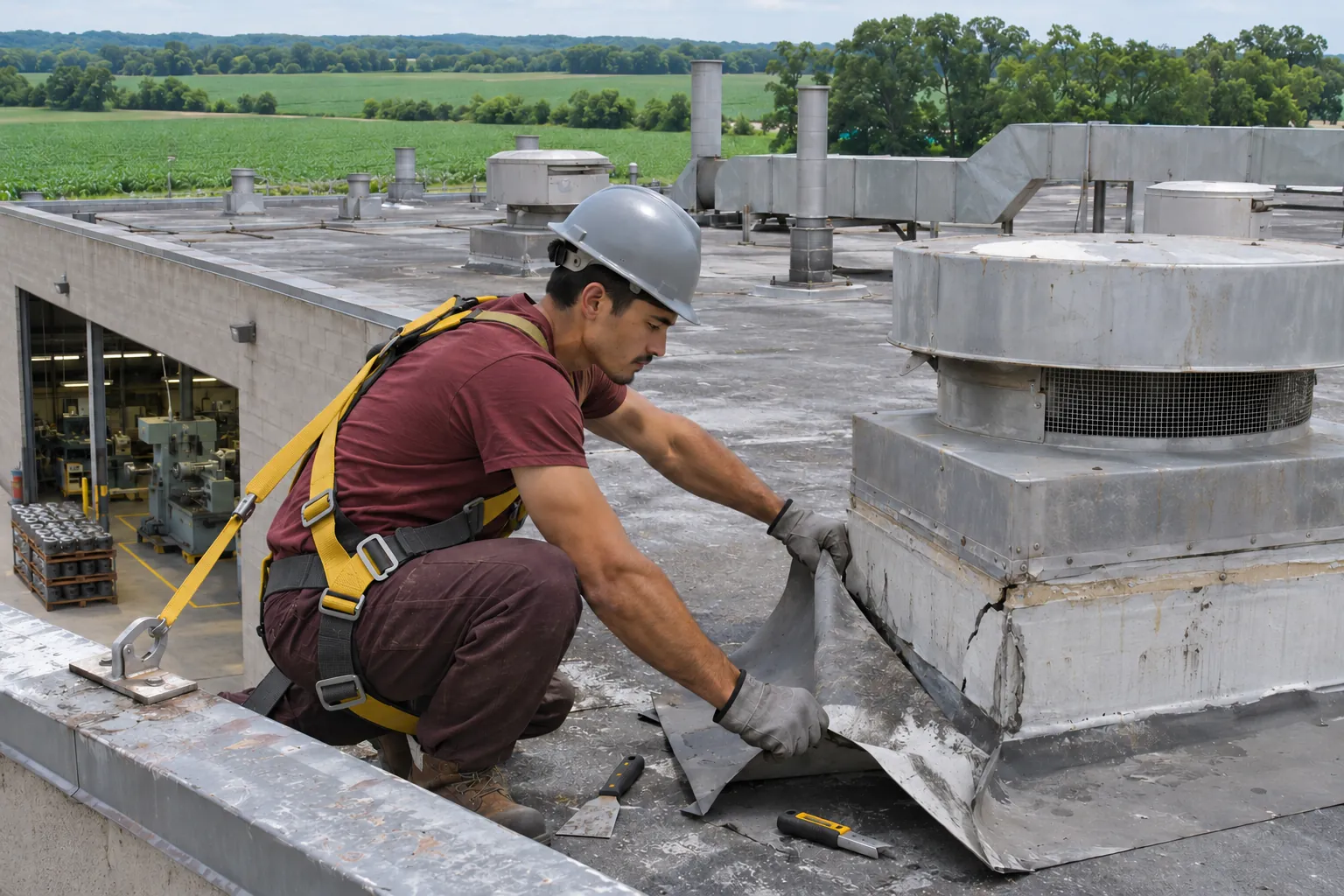
Fan curbs, stacks, and worn paths repaired around production.
Typical RepairsWhat owners of membrane roofs ask most before a repair.
Trace the entry point first, because water often runs along the deck before it drips. Then remove the damaged membrane and any wet insulation and rebuild that area in the same material, lapped into the old sheet. Tape and caulk over a wet area holds only a short while.
Intact small blisters are left alone and watched. Cracked or growing ones, or any sitting in a walking path, get cut open, dried, and sealed under a compatible patch. Blisters across much of the roof point to wet insulation, so we core before patching.
Yes. Waiting lets water soak the insulation and rust the deck. On cold days we install a temporary seal with cold-weather products, then finish the permanent patch during the next mild, dry stretch, often before winter ends.
Downpours overload drains and scuppers, and water rises above flashing that stays dry in light rain. Ponded water also finds small punctures and open laps. Fixing the drain or raising the flashing ends most of these leaks along with the patch.
Roughly two days after rain is the line many roofers use for ponding. Water that sits longer wears the membrane, loads the deck, and pushes into any opening, so we look for the blocked drain or low area that keeps it there.
Tell us where water pools or drips and what membrane the roof has. We will inspect it and send a written repair scope.