Metal Repair Fits When
- Drips line up under screw rows
- End laps leak where panels overlap
- Rust has holed a few eave panels
- Trim at a ridge or wall has loosened
- Hail split seals but left panels whole
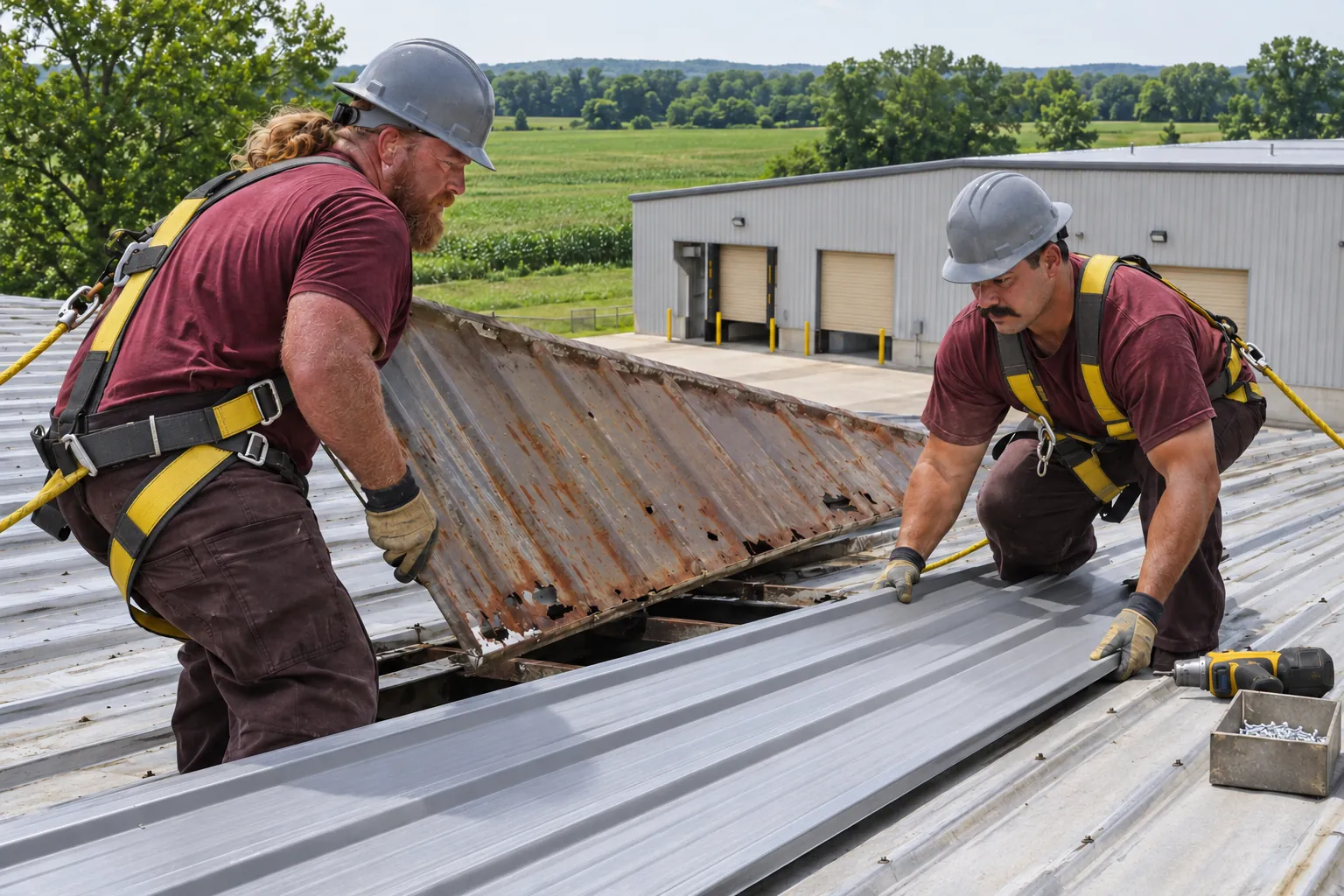
As a Columbus commercial metal roof repair contractor, we replace screws, seal laps, reset trim, and swap rusted panels on steel commercial roofs.
Columbus commercial metal roof repair fits most steel roofs, because the panels usually outlast the screws, sealant, and trim that leak first.
Six conditions show up on most steel roofs we repair. Each card names the cause.
Steel roofs fail at a few details. Each pair names one and what the repair changes there.
Rubber sealing washers harden with sun and cold until each screw becomes a small leak.
Every failed screw comes out and a larger one with a new washer goes in, sealing the hole in solid steel.
Eave and gutter-line panels rust from the underside where water and ice sit longest.
A matching panel slides under the upslope sheet and over its neighbor, with new fasteners and lap sealant.
Sealant behind trim dries out, and short laps let wind push rain under the metal.
Trim gets replaced with longer laps or hemmed edges, and fresh sealant goes in behind it.
Seams on standing-seam roofs lift where clips slip or a panel was stepped on hard.
The seam is re-crimped, the clips are checked, and the lap is sealed where water reached it.
That pattern points to failed washers. Call and we will set a time to replace the screws before the steel around them rusts.
The work order for a steel roof, from the drips inside to the last sealed lap.
From the floor, we note which purlin lines and bays drip, since metal roof leaks tend to follow screw rows and laps.
Up top, each row above the drips gets checked by hand for loose heads, cracked washers, and rust around the hole.
End laps, side laps, ridge caps, wall trim, and curb flashing get opened where needed to see the sealant behind them.
Rusted panels are measured by profile, gauge, and length so replacements lap correctly, and the scope lists each one.
Screws, panels, trim, and sealant go in, and every repair is photographed before the crew leaves the roof.
Steel buildings often carry a membrane section or a leak that needs tracing. These services cover them.
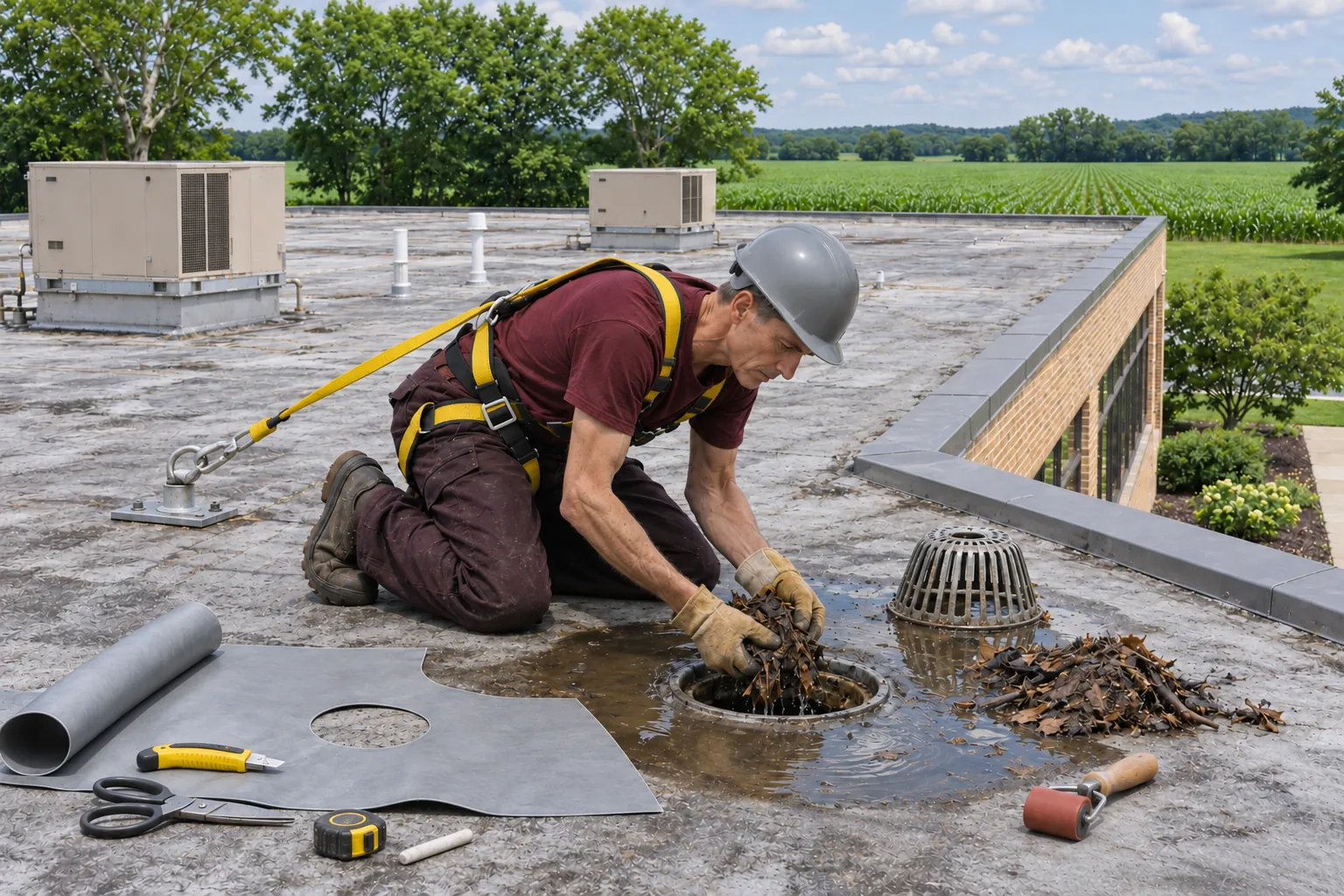
Drains, blisters, and open laps rebuilt in matching membrane.
Typical Repairs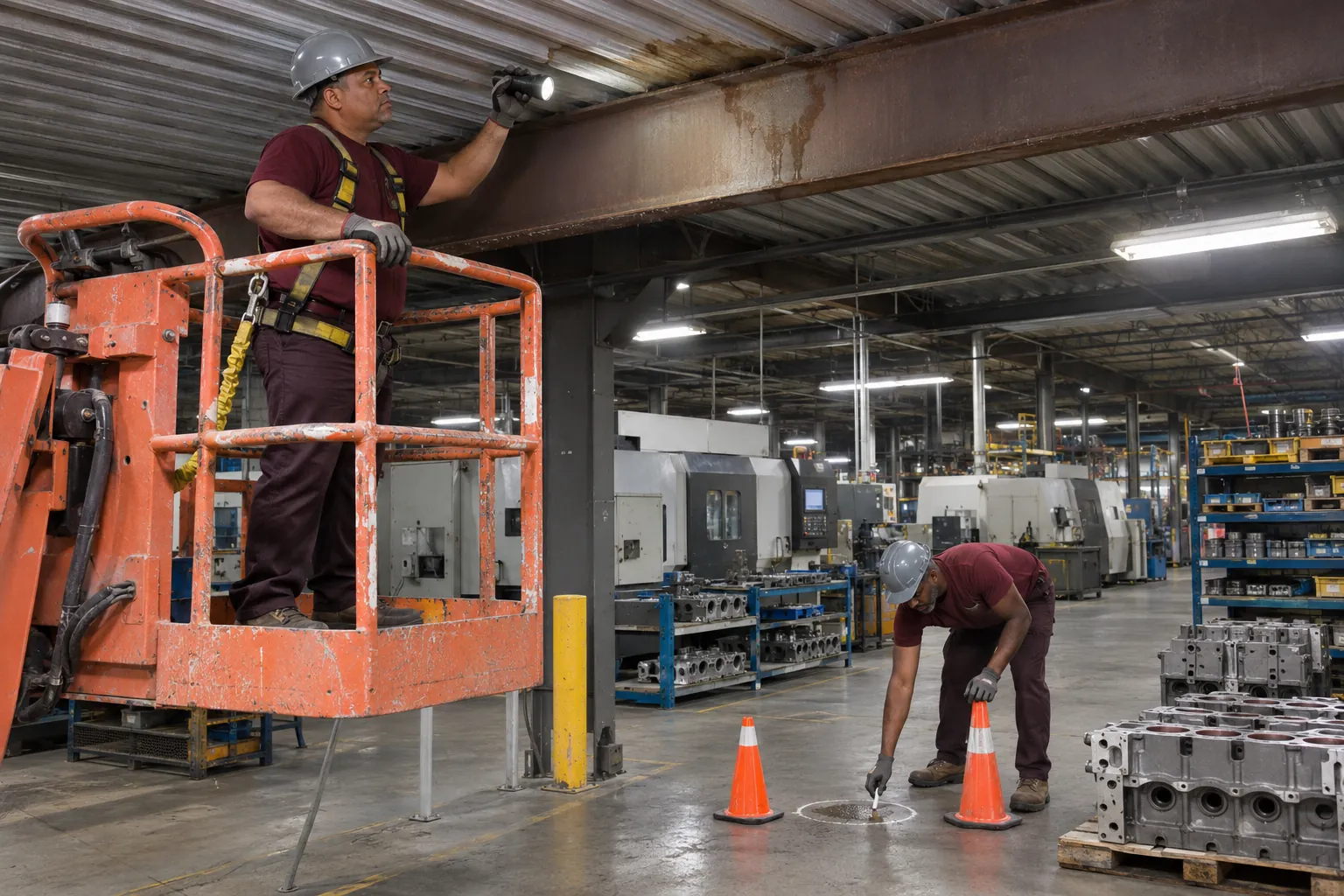
Indoor drips traced up to the roof opening first.
Typical Repairs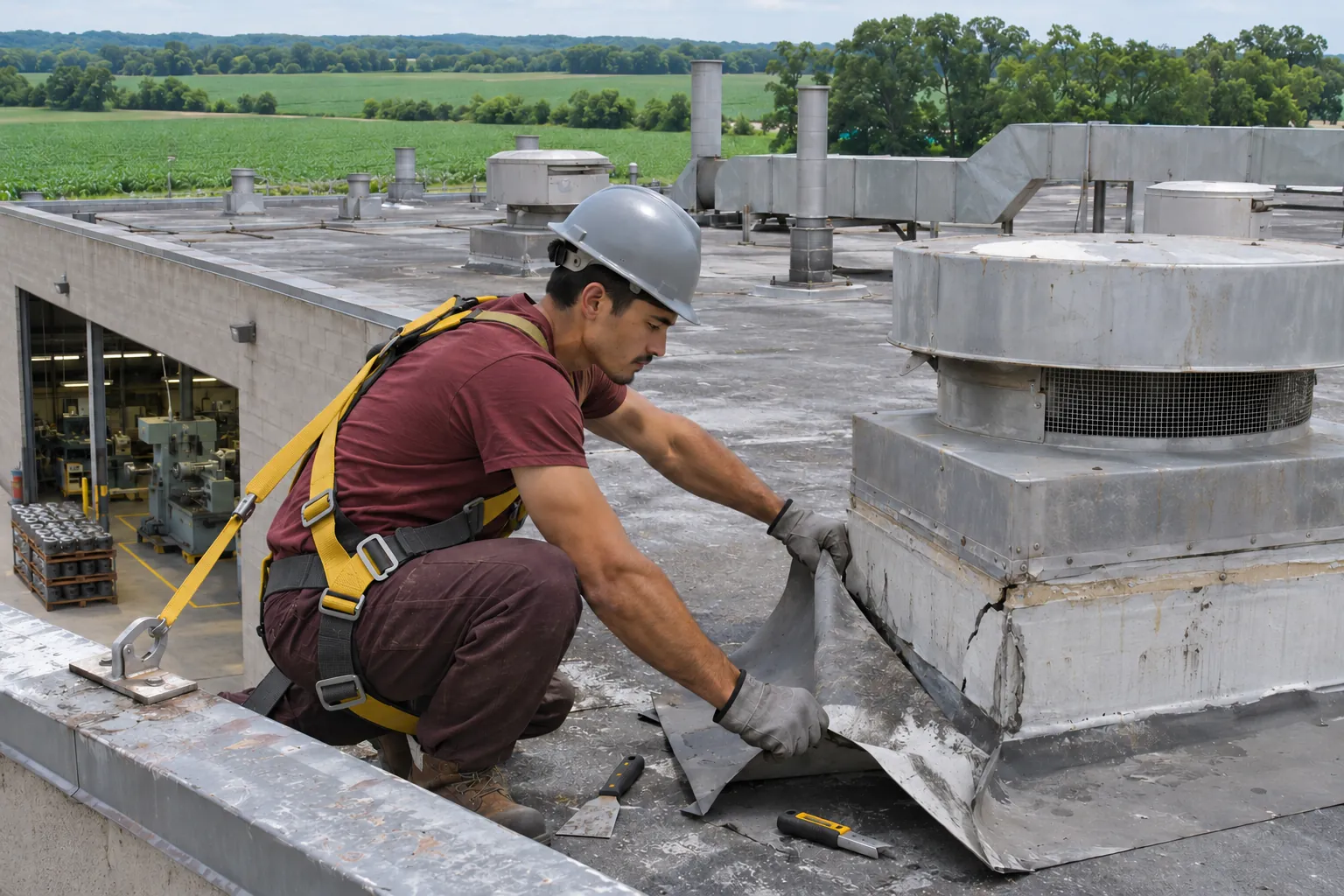
Fan curbs, stacks, and worn paths repaired around production.
Typical RepairsStraight answers about steel roofs, screws, flashing, and hail.
Many commercial steel roofs last 30 to 50 years with upkeep. The screws, sealants, and trim wear out long before the panels, so checking fasteners on a schedule matters most. Panel finish, gauge, and moisture or chemical exposure change the number for each building.
Flashing sits where the roof meets a wall, curb, ridge, or pipe, so it takes the most movement and water. Sealant dries, closures shrink, and short laps let rain blow under. Repairs replace trim and sealant and lengthen laps where the original detail was too short.
Photos come first, then each panel run gets checked for split laps, cracked washers, holed panels, and broken skylights or trim. Dented panels with no cracks usually stay in place. Holed or cracked panels are replaced, and every broken seal is redone.
Fasteners, by a wide margin. Washers age and crack, and temperature swings back screws out, leaving open holes. Open laps and tired flashing at curbs and walls come next. Replacing screws, sealing laps, and fixing flashing stops most of them.
Yes, when a matching profile is available. The old panel is unfastened and the new one laps under and over its neighbors like the original, with new screws and sealant. When rust covers many panels, we price repair and replacement side by side.
Tell us where the drips line up and how old the roof is. We will check every fastener row and send a written scope.